
Water-Saving Taps in Singapore: Are They Worth It?
31 October 2026
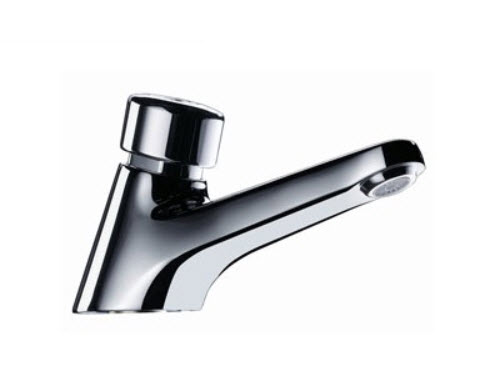
Yes, in most cases. Water-saving taps are worth it if you are renovating, replacing an old or leaking tap, or fitting out a new home. Water in Singapore costs about S$3.53 per cubic meter including GST, and a good tap can cut the water used at that tap by roughly a third to two-thirds. Replacing a modern tap that works well, purely to save money, pays back more slowly.
This guide covers what “water-saving” means in Singapore, how much you can save, and when an upgrade makes sense.
What Is a Water-Saving Tap in Singapore? (WELS Explained)
In Singapore, “water-saving” is defined by PUB’s Water Efficiency Labelling Scheme (WELS). Taps and mixers get a rating of one to three ticks based on how many litres per minute they release. More ticks means less water. Since April 2019, water fittings supplied and installed in new premises and renovated homes must carry at least a 2-tick rating. So any compliant tap you buy today is already reasonably efficient. The real question is whether to go from 2 ticks to 3.
| Tap type | 2-tick flow rate | 3-tick flow rate | PUB-estimated savings (2 / 3 tick) |
|---|---|---|---|
| Basin taps & mixers | above 2 to 4 L/min | 2 L/min or less | 40% / 60% |
| Sink/bib taps & mixers | above 4 to 6 L/min | 4 L/min or less | 29% / 43% |
| Shower taps & mixers | above 5 to 7 L/min | 5 L/min or less | 25% / 38% |
Flow bands from PUB’s WELS requirements; savings from PUB’s potential water savings guide.
How Much Money Can You Save? The Singapore Math
Your water bill has three parts: the water tariff, the water conservation tax and the waterborne fee. Together they come to S$3.24 per cubic meter before GST, or about S$3.53 with 9% GST, for households using 40 m³ or less a month. A cubic meter is 1,000 liters. Because all three charges scale with volume, every liter you avoid saves the full amount.
Here is an illustrative example for a four-person household.
These are assumptions, not measurements:
- Kitchen sink: 10 minutes of running water a day. A 2-tick tap at 6 L/min uses 60 L. A 3-tick tap at 4 L/min uses 40 L. That saves about 20 L a day, or 7.3 m³ a year (about S$26).
- Basin taps: 8 minutes of total use a day. Going from 4 L/min to 2 L/min saves about 16 L a day, or 5.8 m³ a year (about S$21).
That is roughly S$45–50 a year from moving up a tick on two taps. If you are replacing old fittings that ran at 8 to 10 L/min, the gap, and the saving, is larger. Your own figures will vary with how long you run the tap. PUB’s national average is about 141 liters per person per day, so a household of four uses around 17 m³ a month, comfortably under the 40 m³ threshold where prices rise.
Comparison: Standard Tap vs 2-Tick vs 3-Tick vs Aerator
| Option | Typical flow | Upfront cost | Best for |
|---|---|---|---|
| Older non-WELS tap | Often well above current limits | Already installed | Nobody; consider replacing |
| 2-tick WELS tap | Mid-range (see table above) | Standard | Renovations on a budget |
| 3-tick WELS tap | Lowest flow | Usually a modest premium | High-use taps, long-term savings |
| Aerator or flow regulator (retrofit) | Reduces flow at existing tap | Low | Renters, quick fixes, tight budgets |
An aerator mixes air into the stream, so it feels fuller at a lower flow. A flow regulator or “thimble” limits the water that passes through. PUB-linked home guides suggest both as low-cost options. Check the result on a tap that already works, as results vary with the tap and your water pressure.
Which Taps Should You Upgrade First?
Go where water runs longest and where the flow gap is largest:
- Kitchen sink mixer. It is used for the most minutes per day, and moving from 6 to 4 L/min is a big cut.
- Basin taps. The 3-tick limit is half the top of the 2-tick band, which gives the largest percentage saving.
- Shower. Showers use a lot of water per minute, so even small changes add up over a household.
- Bib taps. Worth it if you wash cars, balconies or pets often. Otherwise, low priority.
When Water-Saving Taps Are Not Worth It
Being honest here saves you money:
- Recently installed 2-tick taps. Swapping them for 3-tick ones will take years to pay back.
- Low water pressure. Some higher-floor units and older buildings feel weak with very low flow. Test before you commit.
- Filling pots and buckets. A lower flow means a longer wait, even though total water use stays the same.
- Uncertified products. Check for the WELS label and registration number. Cheap unlabeled taps may not be allowed for installation and may not perform as claimed.
Installing Water-Saving Taps in Singapore
For most installations, hire a licensed plumber and ask for WELS-labelled products. A proper job covers checking the supply connections, fitting the tap, testing for leaks and checking flow and pressure. Tap replacement is quick and best done during renovation or alongside other plumbing work, so you pay for one visit.
Pricing depends on the tap model, whether the old fitting is seized or corroded, access under the sink, and whether piping or an isolation valve also needs changing. The best way to compare is a written quotation that names the exact tap and its WELS rating.
EzPlumber.Sg can help with tap replacement, leak repair and general plumbing for HDB flats, condos and landed homes. Ask for a quotation that includes the product’s WELS rating, so you know what you are paying for.
FAQ: Water-Saving Taps in Singapore
Are water-saving taps compulsory in Singapore?
Taps and mixers must be WELS-labelled, and only fittings rated at least 2-tick can be supplied and installed in new premises and renovated homes. You are not required to rip out existing taps.
Is a 3-tick tap worth it over a 2-tick?
For high-use taps like the kitchen sink and basin taps, usually yes over several years. For rarely used taps, the difference is small.
Do aerators really work?
They reduce flow at the outlet and can cut water use at low cost, but the feel and results depend on the tap and your water pressure.
Does a dripping tap waste much water?
A steady drip adds up over months, and you pay for it at the full S$3.53 per cubic meter. Fix it promptly, since a worn washer or cartridge is often a quick repair.
Do low-flow taps affect hot water?
They may take slightly longer to deliver hot water, but total water wasted while waiting is often lower because less flows during the wait.
How long until water-saving taps pay for themselves?
If you are replacing a tap anyway, the extra cost of a 3-tick model can pay back within a few years. If you replace a working tap only to save water, expect a longer wait.
The Bottom Line
Water-saving taps are a sensible, low-risk upgrade in Singapore, especially at renovation or when a tap is already due for replacement. Choose WELS-labelled products, put 3-tick models where water runs the most, and use a licensed plumber. If you want a quote or a quick check on what your taps are costing you, contact EzPlumber.Sg.
Need a plumber today?
Call or WhatsApp EZ Plumber SG for a fast, transparent quote — islandwide.